Use the diagrams below as your measuring reference and follow each step in order.
Roller Blind Measure Guide
Measure once. Order with confidence.
As you work through the guide, this guide covers the three common roller-blind installations: recess fit, face fit onto an architrave, and face fit around a square-set or frameless opening. Select the method that matches the window before taking the order dimensions.
Standard windows covered belowRecess + two face-fit methods
Before you start measuring
Confirm the mounting method
For this step, a recess-fit blind sits within the window opening. A face-fit blind is mounted around the opening, giving the fabric more overlap and coverage.
Measure each window separately
At this stage, measure every opening separately. Two windows that look the same can still differ by several millimetres.
Identify the fixing surface
For the order, identify the fixing surface before placing the order — reveal, architrave, plaster/stud, brick, concrete, stone or tile.
Allow for the control system
As you work through the guide, allow for the operating system when planning the blind. Chain control, Magic Spring cordless and motorised options can change the clearance and control-side requirements.
Check fabric samples in the room
For this step, check physical fabric samples in the room so you can compare colour, privacy, blockout performance and sunscreen openness in the actual light.
Recess Fit or Face Fit?
When Recess Fit Works Well
At this stage, recess fitting gives the blind a built-in look and keeps decorative architraves visible. Because room is required for the brackets and operating mechanism, some light gap at the sides is normal with this installation.
When Face Fit Works Well
For the order, face fitting increases the overlap around the window, which can improve privacy and room darkening. It is also useful when handles, winders or an uneven/shallow reveal make recess fitting impractical.
Recess Fit — Inside the Window Opening
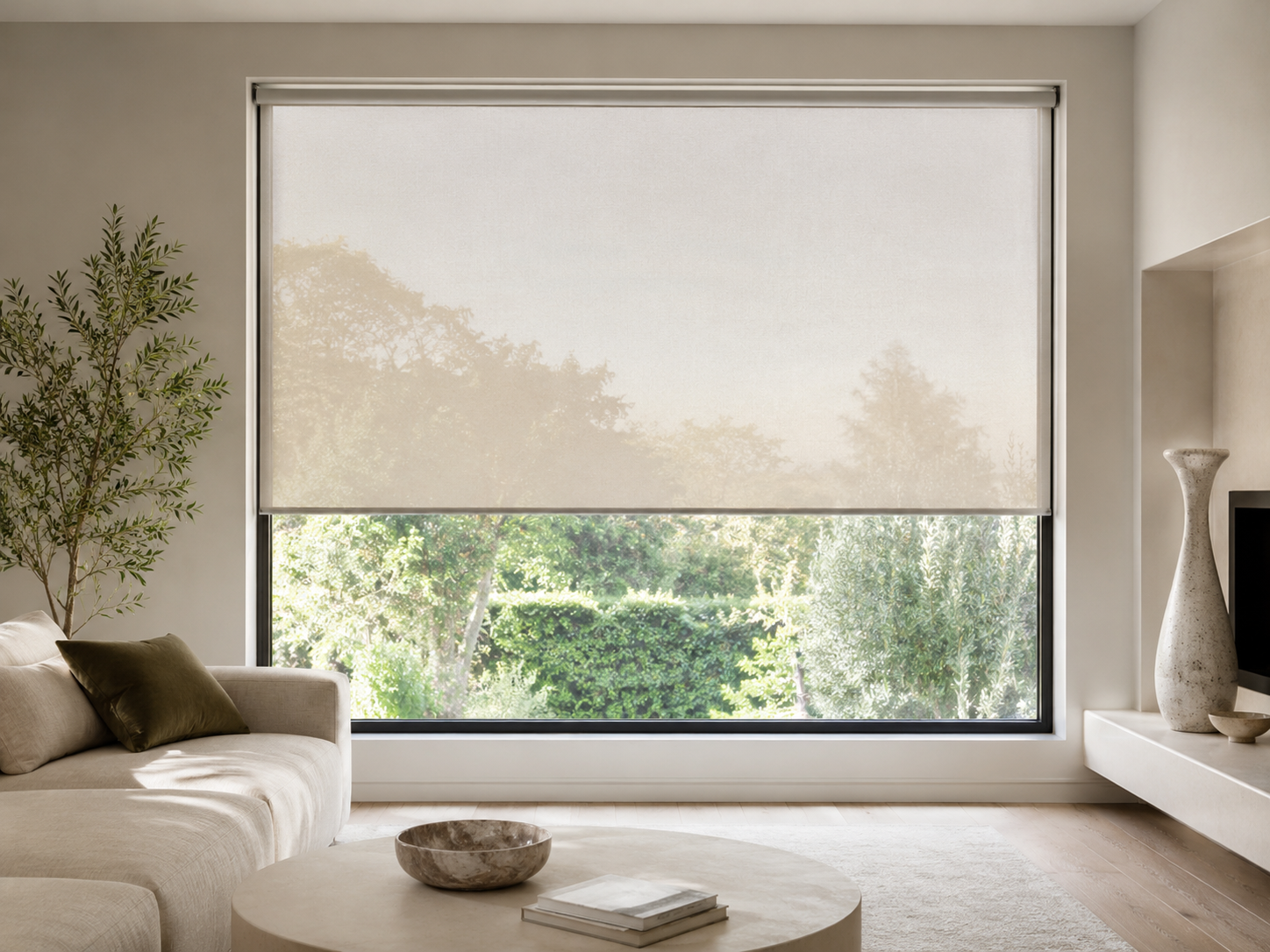
As you work through the guide, a blind mounted within the window frame/reveal is referred to as a recess fit.
For this step, recess fit creates a clean, minimal appearance that works particularly well in living areas. Light-filtering and sunscreen fabrics are common choices when you want softer daylight without visually covering the surrounding trim.
At this stage, expect a small side light gap with a recess-fit roller blind. The method is best suited to a reasonably deep, unobstructed reveal, and a front-roll configuration is usually the preferred setup.
For the order, motorisation can also be selected, using either a wired motor or a battery-powered option.
Recess Fit — Take the Measurements
1
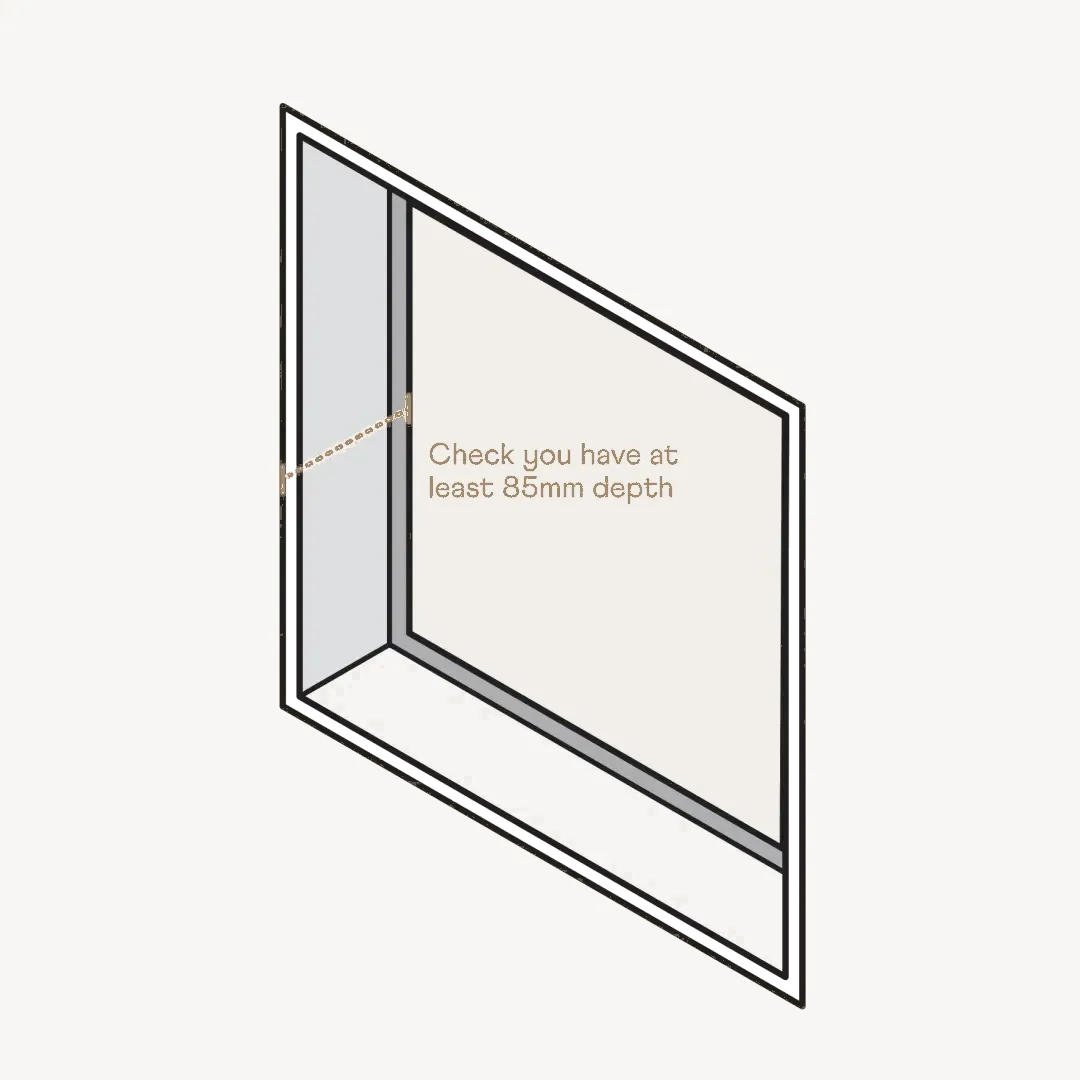
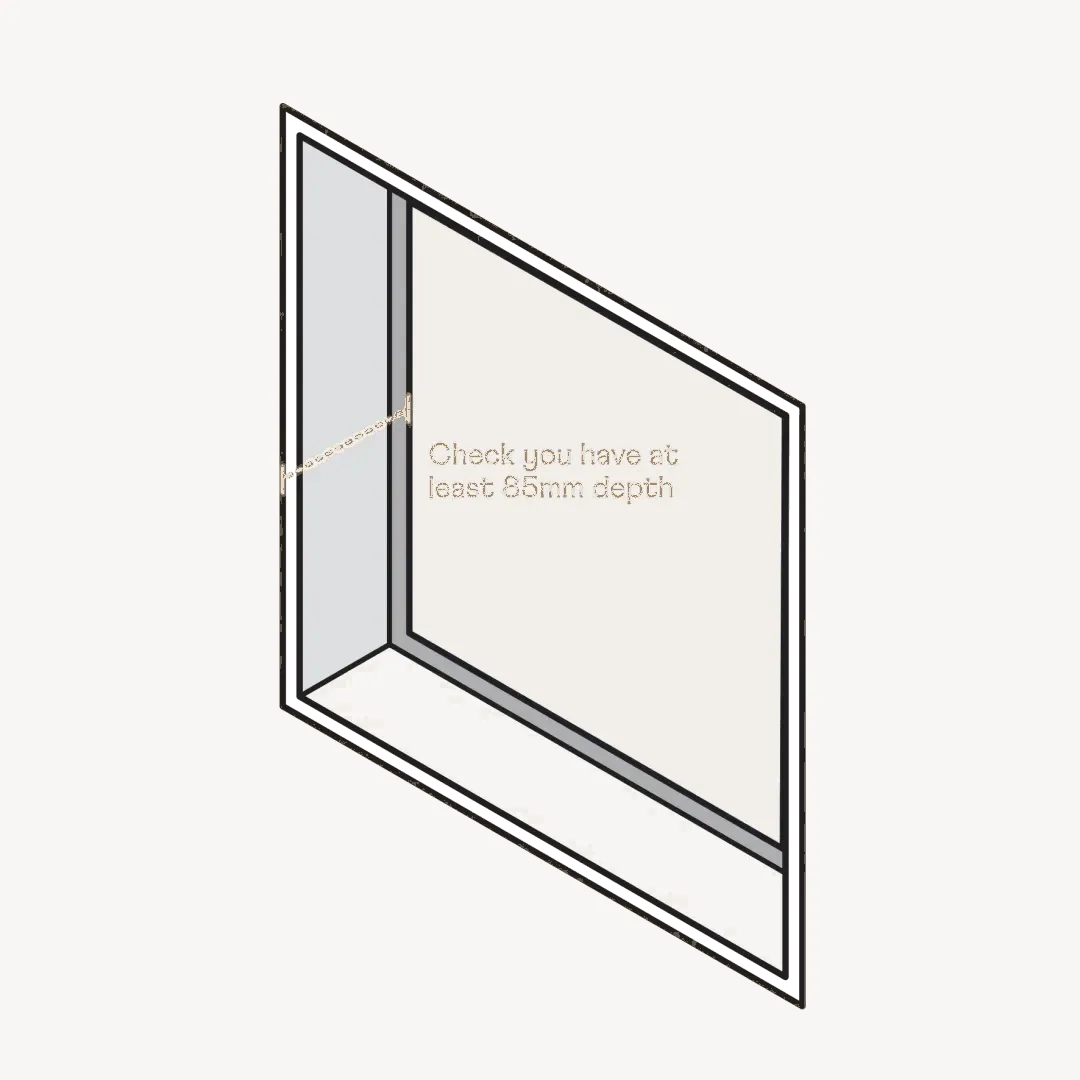
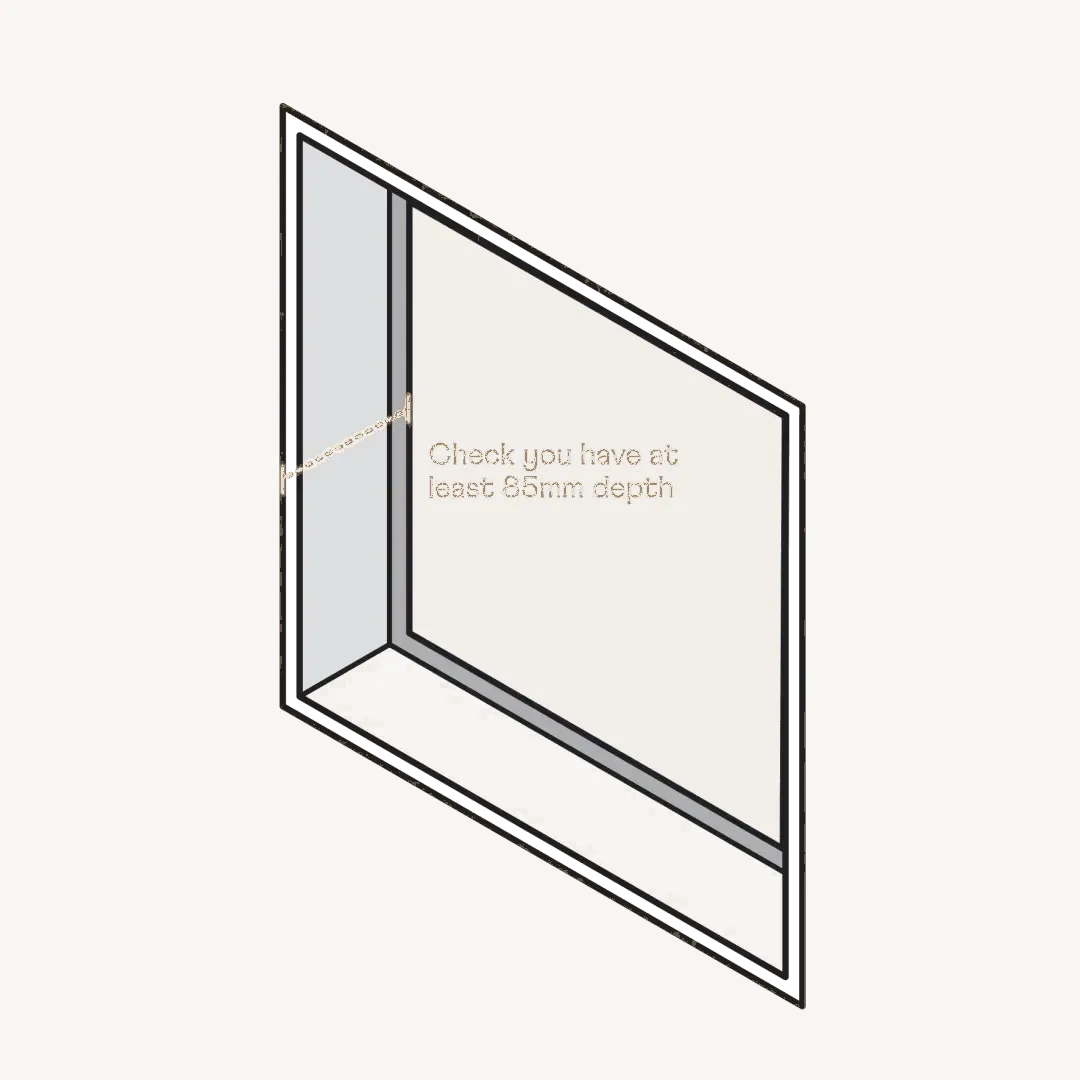
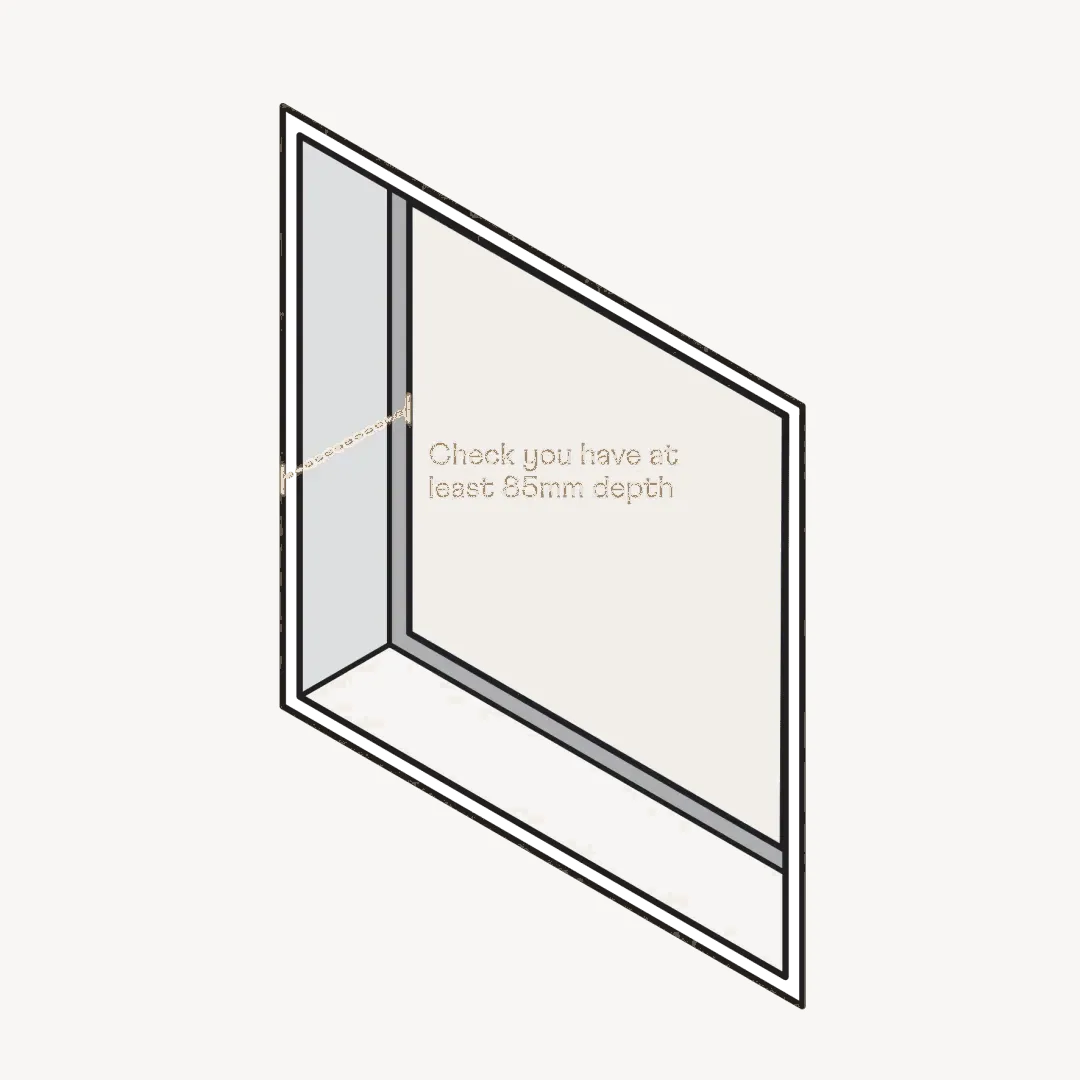
Confirm the Recess Depth
As you work through the guide, for a recess fit, confirm at least 70 mm between the glass and the front edge of the window frame. That depth gives the roller blind enough room to sit within the opening.
2
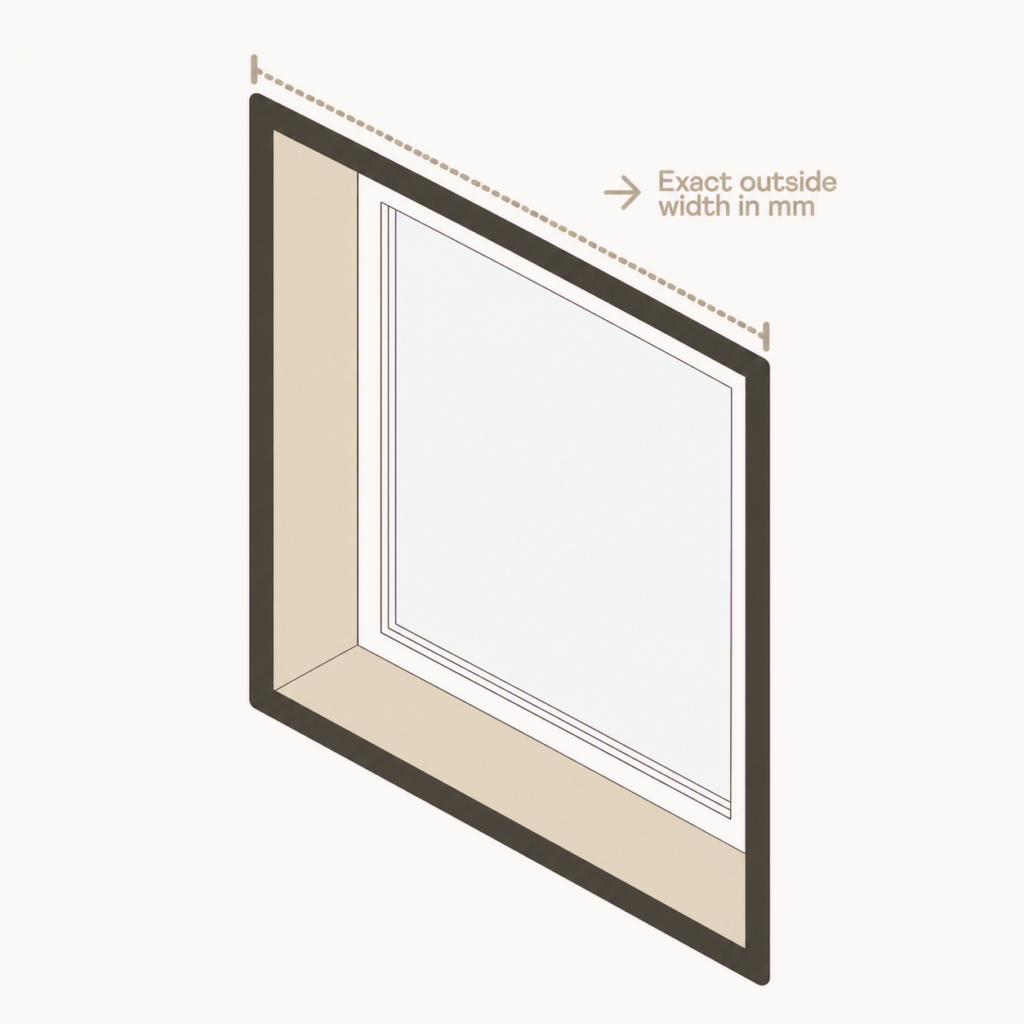
Measure the Width
For this step, take the internal width across the top of the window frame and record the exact figure. A 2 mm deduction is applied during manufacture so the finished blind fits neatly within the reveal.
At this stage, the finished fabric is approximately 30–35 mm narrower than the bracket-to-bracket width because the control and bracket hardware occupy space at each end.
3
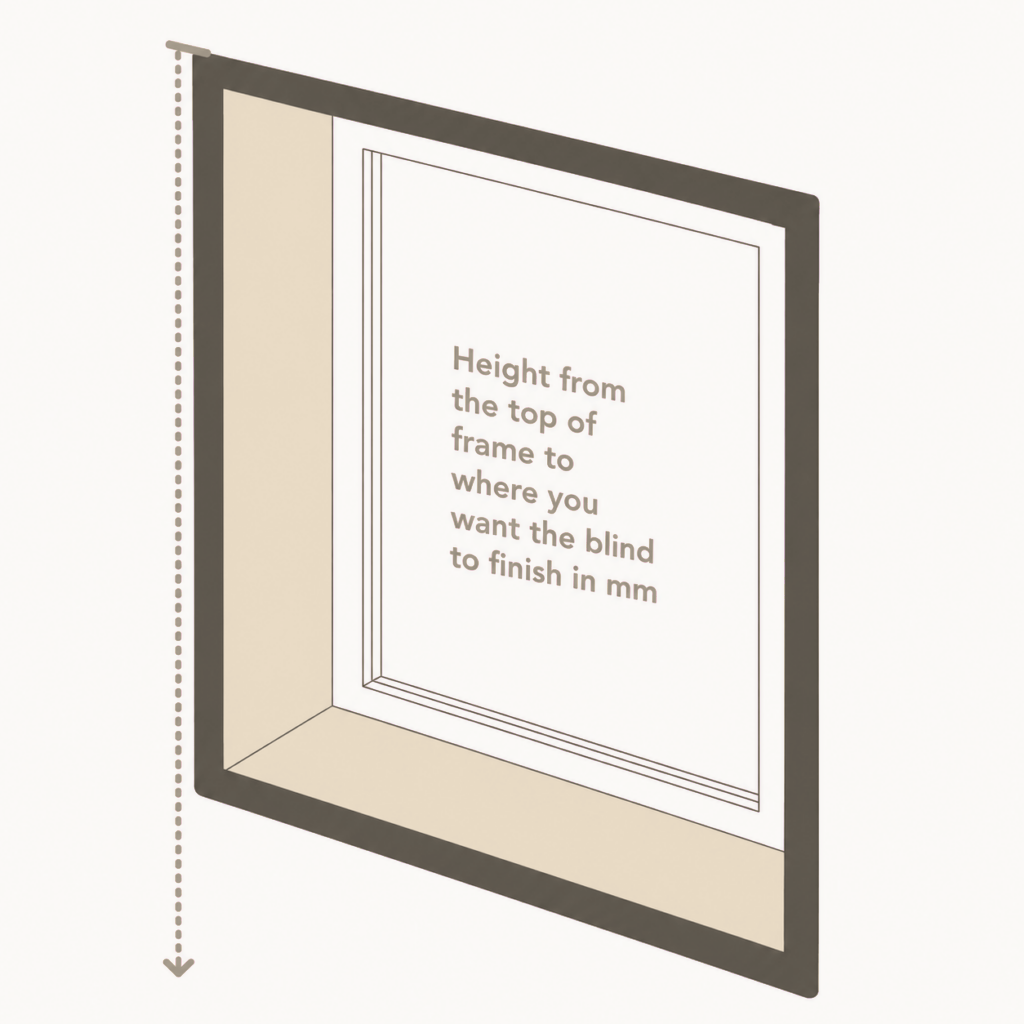
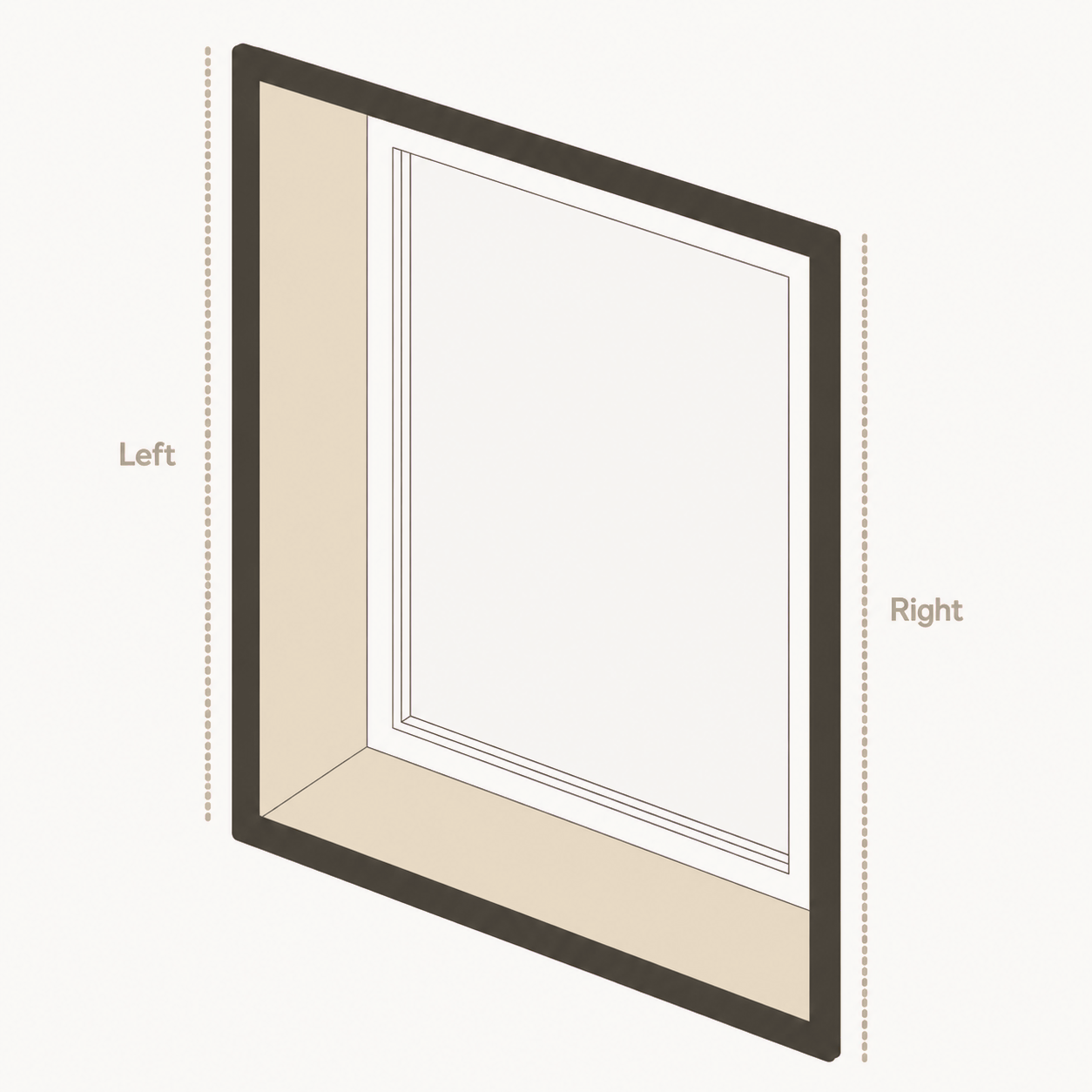
Measure the Drop
For the order, measure the internal height from the top of the frame to the bottom and record the actual drop. This is the dimension used for the lowered position of the blind.
4
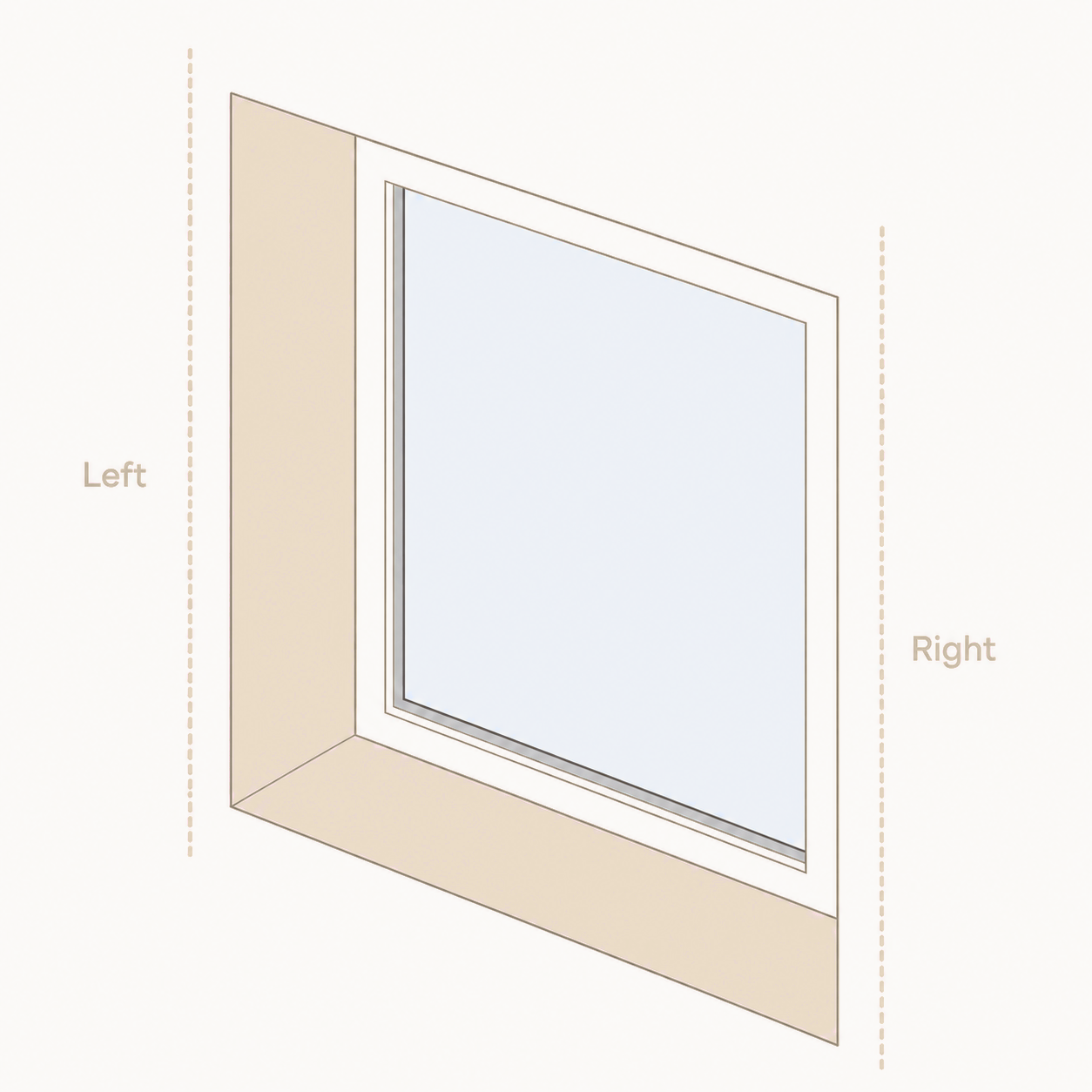
\nChoose your chain side
As you work through the guide, select the operating side after checking everyday access. Keep the chain or control easy to reach, away from furniture and obstructions, and on the less visually intrusive side where practical.
5
\nOrder your custom-made blinds online
For this step, once the measurements are written down, enter them in the online roller-blind configurator.
At this stage, this method normally fixes to the face of the architrave/window frame for a tidy outside-mount installation.
For the order, the extra overlap makes face fit a strong option for bedrooms where privacy and light control are priorities.
As you work through the guide, blockout fabric is the usual choice when the aim is stronger room darkening and privacy.
For this step, face fit also clears many handles, locks, winders and other fittings that project into the reveal.
At this stage, where the window allows it, back roll generally provides better edge coverage and a cleaner face-fit appearance.
For the order, for chain-free operation, choose Magic Spring cordless or motorisation. Motorised blinds can use either hardwired or battery-powered motors, depending on the selected setup.
Face Fit with Architrave — Take the Measurements
1
Measure the Width
As you work through the guide, for an architrave face fit, take the overall outside width of the window frame at the top. Submit that figure as the bracket-to-bracket order width.
For this step, allow for approximately 30mm less fabric than the overall bracket-to-bracket width because of the operating hardware. Always provide the requested bracket width rather than a cloth-width measurement.
2
Measure the Drop
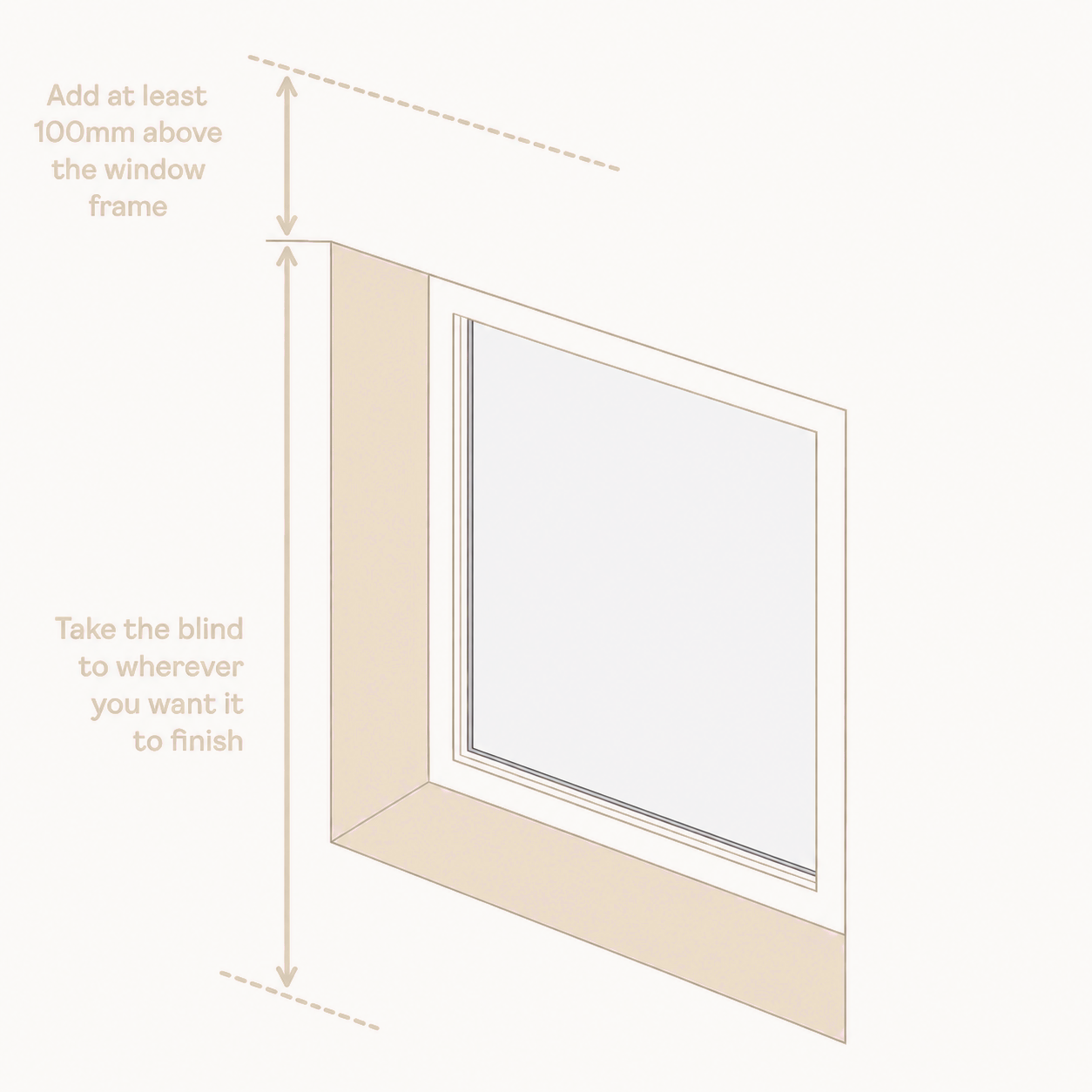
At this stage, take the drop from the top of the window frame to the point where you want the lowered blind to finish. That point may be the bottom of the frame, just above the floor, or a height aligned with other blinds in the room.
For the order, on shorter windows, extending the blind approximately 100–200mm below the sill usually improves coverage and gives the installation better visual proportion.
3
Choose the Control Side
As you work through the guide, select the operating side after checking everyday access. Keep the chain or control easy to reach, away from furniture and obstructions, and on the less visually intrusive side where practical.
4
Order your custom-made blinds online.\n
For this step, once the measurements are written down, enter them in the online roller-blind configurator.
At this stage, when there is no architrave, an outside-mounted roller blind is treated as a frameless/square-set face fit.
For the order, on plaster walls, fix into suitable studs wherever possible to provide a secure mounting point.
As you work through the guide, the same face-fit method can also be used on suitable concrete, brick, stone or tiled substrates with the correct fixings.
For this step, this installation is particularly useful in bedrooms because the extra overlap improves light control.
At this stage, for stronger privacy and darkness, pair this mounting method with a blockout fabric.
For the order, compared with recess fit, the additional side overlap reduces light entering around the fabric edges.
As you work through the guide, mounting outside the opening also helps clear winders, handles and other protruding window hardware.
For this step, use back roll where the window layout permits it, as this generally gives the strongest coverage and cleanest appearance.
At this stage, motorisation is available with battery-powered or hardwired motor options for compatible configurations.
Frameless Face Fit — Take the Measurements
1
Measure the Width
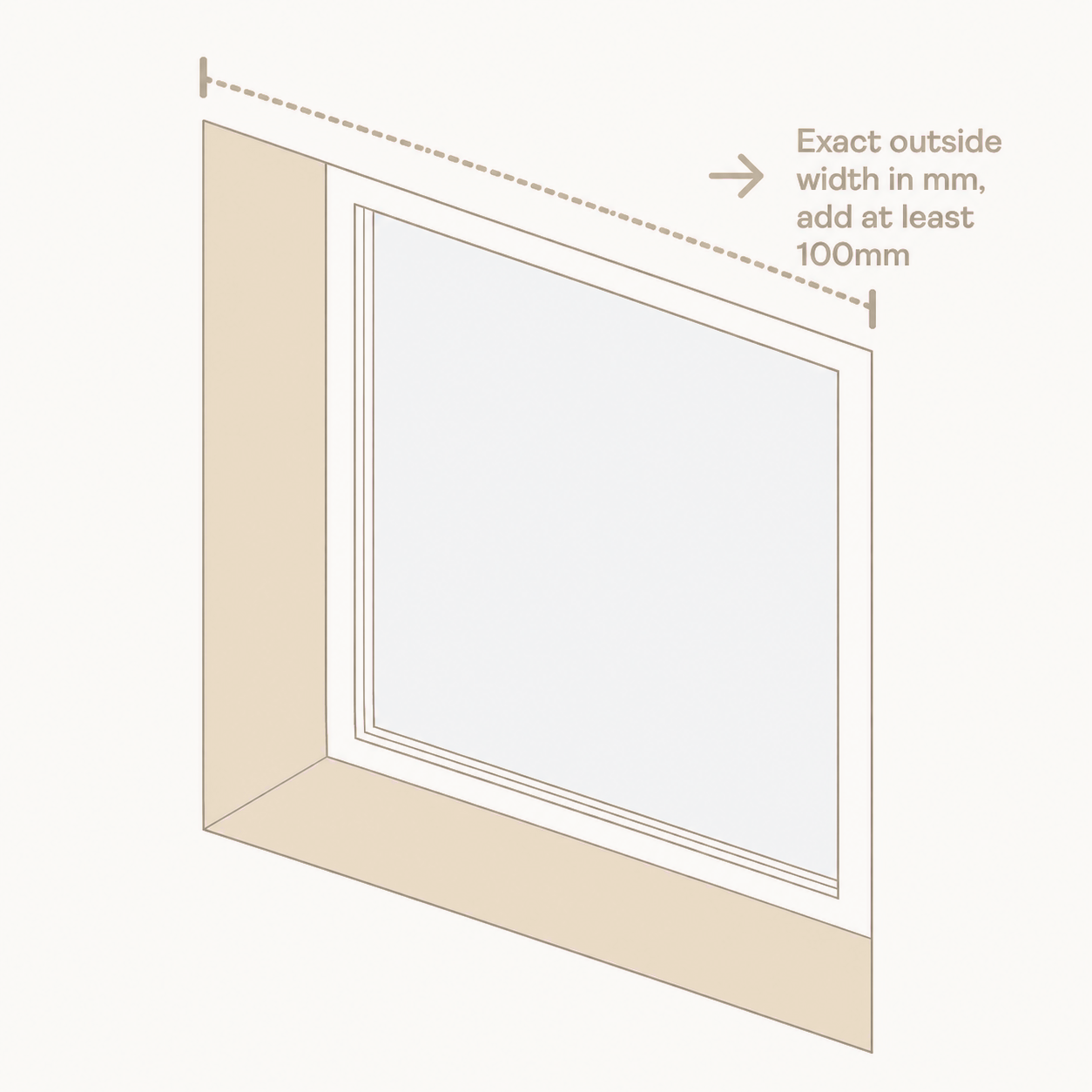
For the order, measure the outside width of the frameless opening across the top and record the actual figure.
As you work through the guide, add at least 100mm to that measured window width to increase side overlap and reduce light gaps. The resulting figure is the bracket-to-bracket order width.
For this step, example: a 1510mm window plus the minimum 100mm allowance produces a 1610mm order width.
At this stage, if there is enough wall space, increasing the overlap beyond 100mm can provide still better side coverage.
For the order, because the operating hardware sits at both ends, the fabric itself will finish approximately 30–35mm narrower than the bracket-to-bracket order width.
2
Measure the Drop
As you work through the guide, record the outside width across the top of the opening; use that figure as the base bracket-to-bracket width.
For this step, expect the fabric to finish approximately 30-35mm narrower than the bracket-to-bracket measurement because of the end mechanisms.
At this stage, example: with a 1200 mm opening drop, allowing 100 mm above the opening and approximately 250 mm below it results in a 1550 mm order drop.
3
Choose the Control Side
For the order, select the operating side after checking everyday access. Keep the chain or control easy to reach, away from furniture and obstructions, and on the less visually intrusive side where practical.
4
Order your custom-made blinds online.\n
As you work through the guide, once the measurements are written down, enter them in the online roller-blind configurator.
For this step, write all roller-blind dimensions in Width × Drop order.
At this stage, take a separate set of measurements for every window, even when the openings appear identical.
For the order, supply the dimensions requested by the chosen mounting method without substituting a different reference point.
As you work through the guide, remember that recess-fit roller blinds require side clearance for the brackets and controls, so some edge light gap is normal.
For this step, where maximum room darkening is the priority, consider a face fit, curtains, or a full blockout cassette rather than relying on a standard recess-fit roller alone.
At this stage, for unusual openings or unclear fixing conditions, contact us before submitting the order.