Plantation Shutter Materials Compared
The material used to manufacture a plantation shutter affects much more than its appearance. It can influence moisture resistance, stability, weight, maintenance, finish and how suitable the shutter is for different rooms in the home. The three materials most commonly discussed when comparing shutters are timber, aluminium and PVC. Each has strengths, but they are not interchangeable. For most interior residential applications, we believe aluminium-reinforced PVC offers the best combination of appearance, durability, moisture resistance, stability and value. Timber remains an excellent choice when the natural look and grain of real stained wood is an important part of the design.
In this article
- Why shutter material matters
- Timber shutters
- When should you choose timber?
- Aluminium shutters
- PVC plantation shutters
- Aluminium-reinforced PVC
- Are PVC shutters waterproof?
- PVC vs timber
- Painted white PVC vs painted timber
- Which material is best for bathrooms and kitchens?
- What about heat and insulation?
- Durability and maintenance
- So, what is the best material for plantation shutters?
Why shutter material matters
Plantation shutters are expected to remain straight, operate smoothly and retain a consistent finish over many years. That makes the construction material particularly important.
When comparing shutters, consider:
- How the material reacts to moisture.
- Whether long louvres are internally reinforced.
- Resistance to bowing and warping.
- How easy the surface is to clean.
- Whether the shutter is intended for interior or exterior use.
- Whether you want a painted finish or visible natural timber grain.
- Warranty and overall product construction.
For this step, a shutter should be judged as a complete engineered product rather than by the material name alone.
Timber shutters
Timber is the traditional plantation-shutter material and remains popular because of its natural appearance.
Real timber can be stained rather than simply painted, allowing the grain, variation and character of the wood to remain visible. This can create a warm, premium finish that works particularly well in traditional interiors or rooms where natural materials are an important part of the design.
Timber can also be machined and finished in a wide variety of ways, making it a versatile material from an aesthetic point of view.
The main consideration is moisture. Timber is a natural material and can react to changing environmental conditions. Prolonged exposure to moisture can contribute to swelling, movement or warping, depending on the timber, construction and finish.
For this reason, timber is generally not our first recommendation for moisture-prone rooms such as bathrooms or areas where the shutter may regularly be exposed to water.
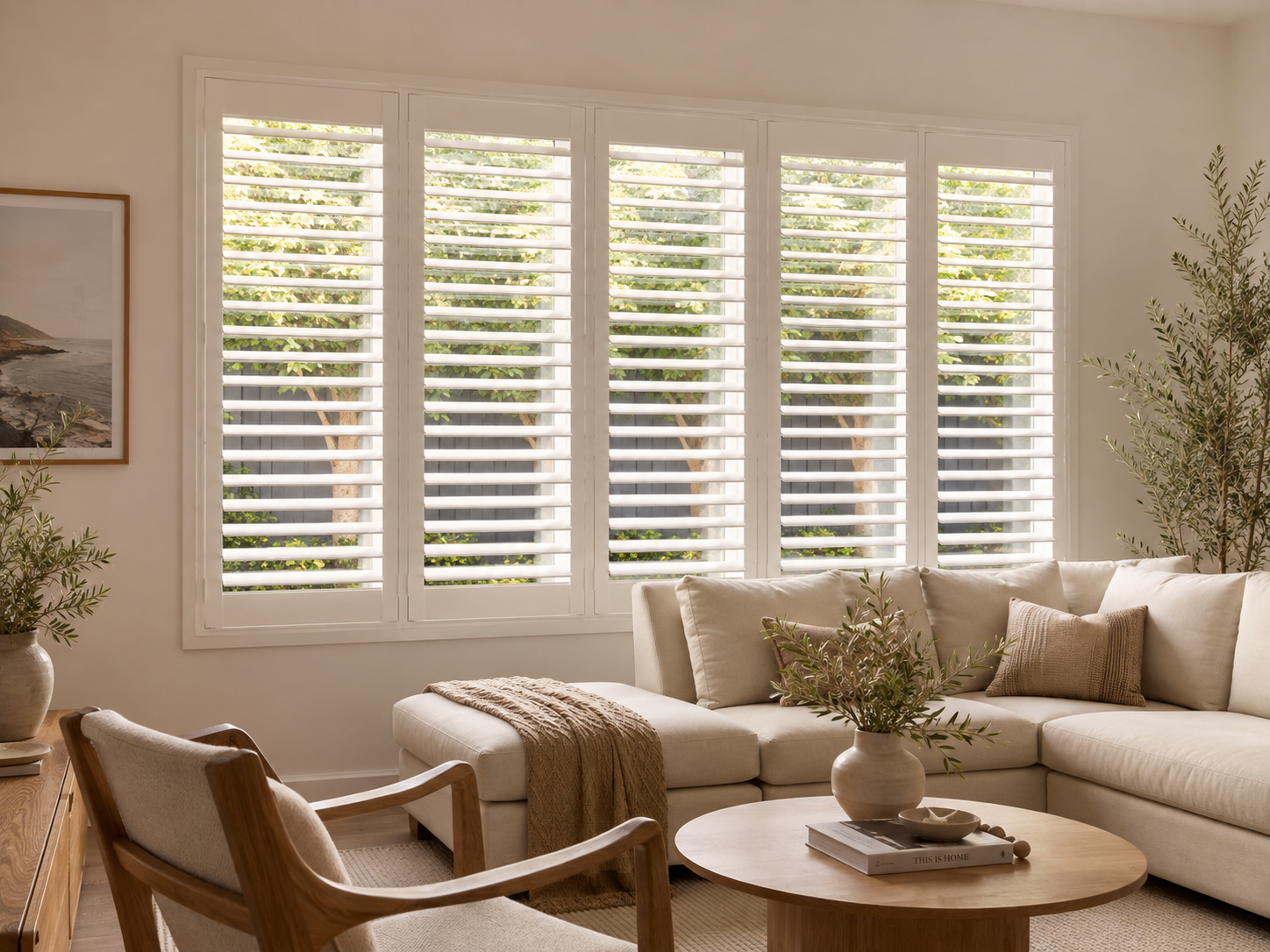
When should you choose timber?
For the order, choose timber when you specifically want the appearance of real wood.
A stained timber shutter displays natural grain and variation that a synthetic material cannot genuinely reproduce. If that is an important part of the room, the additional cost of timber can make sense.
However, if you intend to choose a painted white or neutral shutter, much of the visual reason for choosing timber disappears because the grain is covered by the painted finish.
Once installed, there is very little visual difference between a high-quality painted PVC shutter and a painted timber shutter from normal viewing distance.
For most customers wanting a white plantation shutter, PVC therefore provides the more practical option.
Aluminium shutters
Aluminium is strong, lightweight and capable of being used in demanding applications. It is commonly associated with shutters designed for exterior, balcony or high-exposure environments where weather resistance and structural strength are particularly important.
Aluminium does not behave like timber and does not absorb water, but exposed aluminium systems need appropriate coatings and design to protect against oxidation and corrosion, especially in harsh or coastal environments.
It also has a very different appearance and thermal behaviour from an interior PVC or timber plantation shutter. Aluminium readily conducts heat, so it can become hot or cold depending on the surrounding conditions.
For a typical interior residential plantation shutter, aluminium is therefore a different type of solution rather than automatically being a superior material.
As you work through the guide, at Atelier Blinds we instead use aluminium where it provides the greatest benefit: hidden inside our PVC louvres as structural reinforcement.
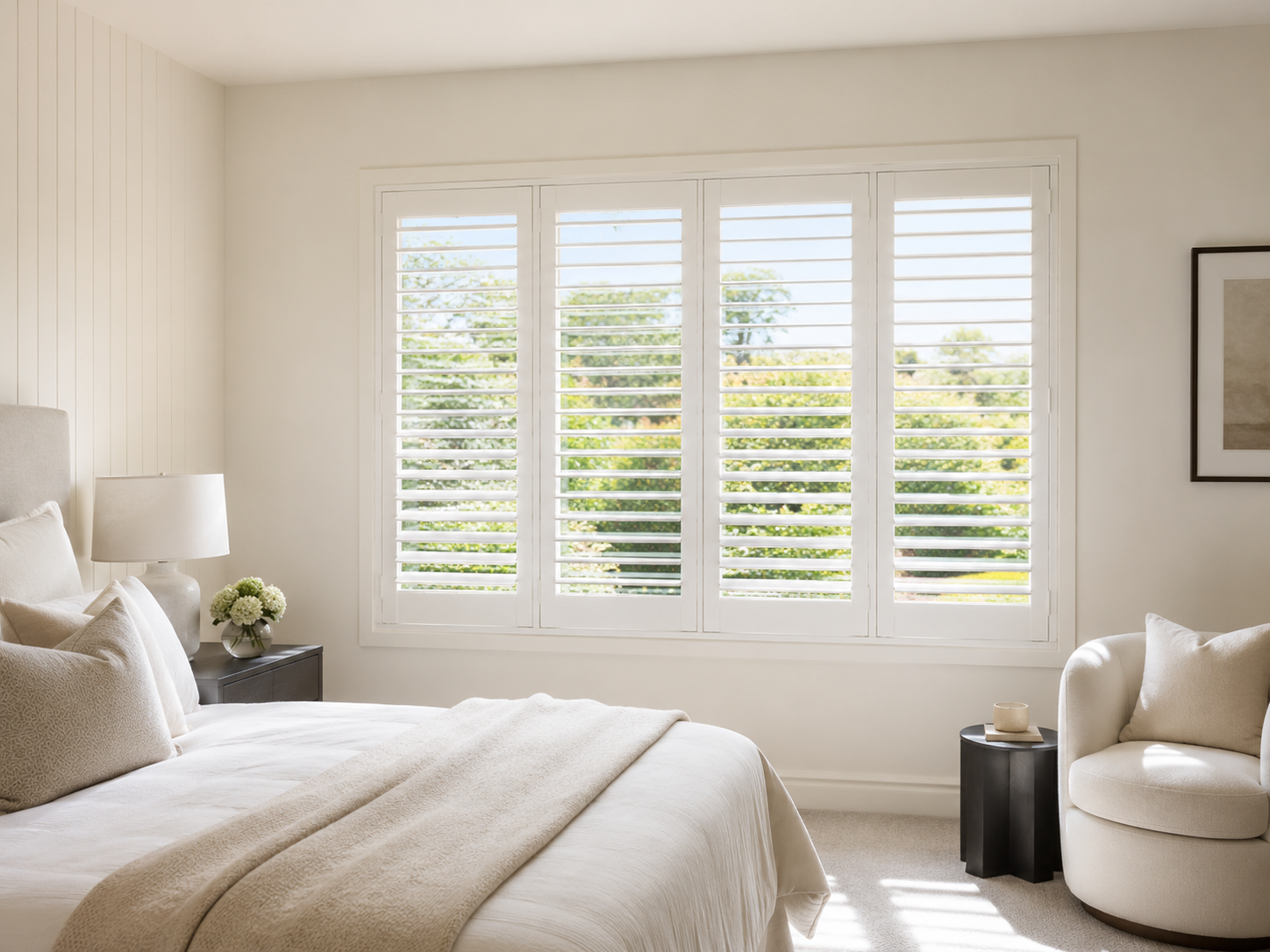
PVC plantation shutters
PVC is an excellent material for interior plantation shutters because it combines a smooth, consistent finish with excellent resistance to moisture and straightforward maintenance.
Unlike natural timber, PVC does not absorb water. This makes it particularly practical for bathrooms, kitchens, laundries and other interior areas where humidity, splashes or regular cleaning may be a consideration.
The surface is also easy to maintain. Dust can generally be removed with a soft cloth and marks can be wiped away without the more specialised maintenance that some natural timber finishes can require.
PVC also produces a very consistent painted appearance. For customers choosing the classic white plantation-shutter look, this is one of its major strengths.
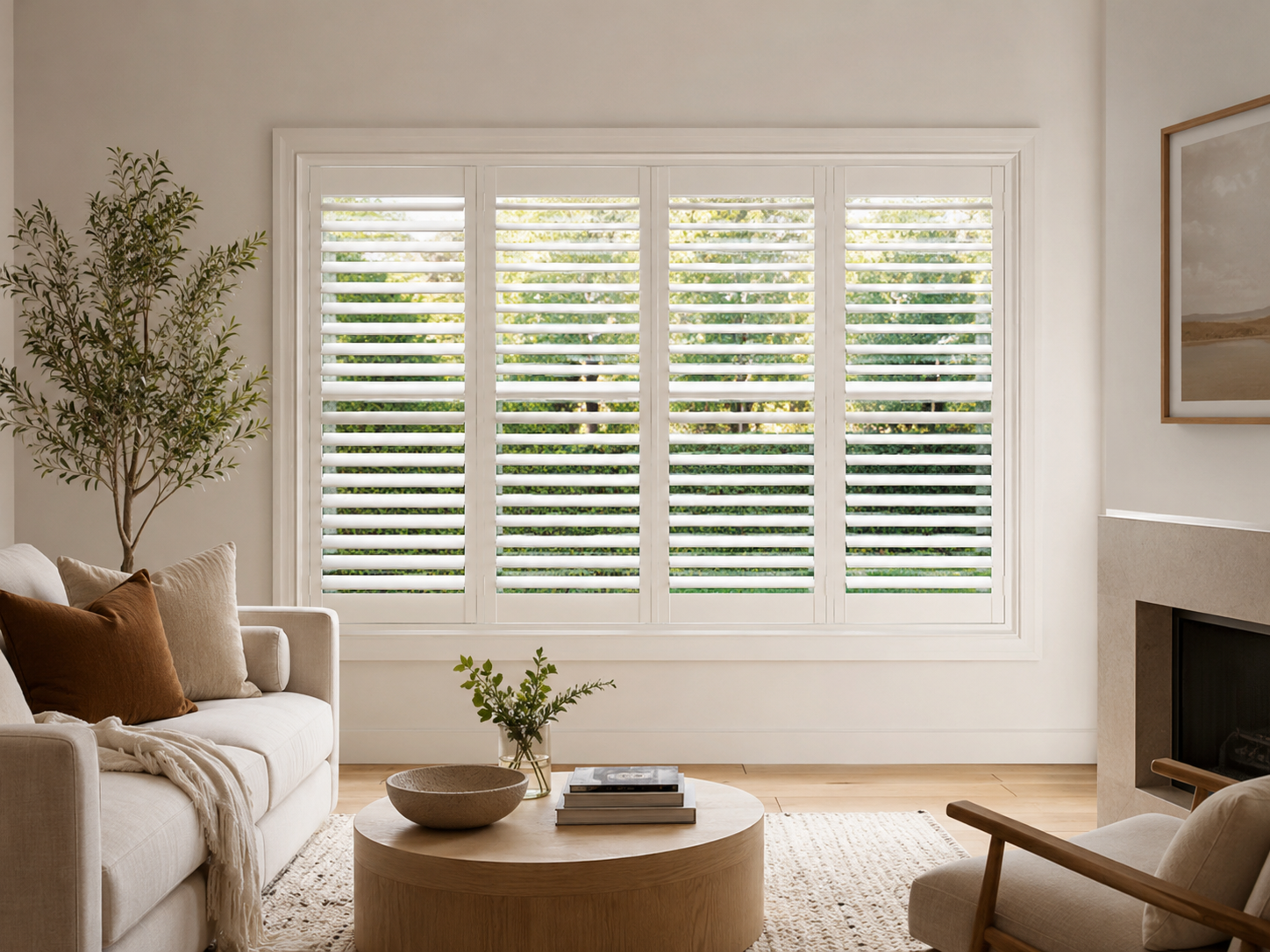
Aluminium-reinforced PVC
Not every PVC shutter should be assumed to have the same construction.
At this stage, our PVC shutters use an internal aluminium core to reinforce the louvres. This combines the moisture resistance and clean finish of PVC with additional structural strength from aluminium.
The reinforcement is particularly important because plantation-shutter louvres are long, relatively thin components that need to remain straight while being repeatedly opened and closed.
The internal aluminium core helps increase rigidity and reduce the tendency for the louvre to bow or warp over time.
For this step, rather than choosing between the advantages of PVC and aluminium, this construction uses both materials for the job each performs best: PVC for the exterior surface and aluminium for hidden internal reinforcement.
Are PVC shutters waterproof?
At this stage, the PVC material used in our shutters is waterproof, which makes it particularly suitable for moisture-prone areas inside the home.
That is different from saying the shutter is designed for outdoor use.
As you work through the guide, our PVC plantation shutters are intended for interior installation only. They should not be installed outside the home where the complete shutter, hardware and finish would be continuously exposed to exterior weather conditions.
For an interior bathroom, kitchen or laundry, however, PVC provides a major practical advantage over natural timber because the material itself does not absorb moisture in the same way.
PVC vs timber
For most customers, the useful comparison is not simply “plastic versus wood”. It is a comparison between the finished appearance and practical performance of two different shutter systems.
PVC offers:
- Excellent moisture resistance.
- Easy cleaning.
- A consistent painted finish.
- Internal aluminium reinforcement in our shutters.
- Strong resistance to bowing and warping.
- Excellent suitability for kitchens and bathrooms.
- Generally better value for a painted shutter.
Timber offers:
- Genuine natural wood.
- Visible grain and natural variation.
- The ability to create beautiful stained finishes.
- A traditional premium appearance when the timber itself is intended to be seen.
If you want a stained natural-wood shutter, timber has a clear aesthetic advantage. If you want a painted white shutter, PVC will generally make more sense.
Painted white PVC vs painted timber
White remains one of the most popular plantation-shutter finishes because it creates a clean appearance and works with a wide variety of interiors.
Once timber has been painted white, the natural grain that makes real timber visually distinctive is largely hidden. This means the finished appearance of painted timber and a quality painted-look PVC shutter can be extremely similar once installed.
That is why we generally do not recommend paying the timber premium simply because timber sounds like the more expensive material.
As you work through the guide, if the final shutter is going to be white, consider the practical characteristics as well: moisture resistance, stability, cleaning, reinforcement and price.
On those criteria, aluminium-reinforced PVC is generally the stronger all-round choice.
Which material is best for bathrooms and kitchens?
For bathrooms, kitchens and other moisture-prone interior areas, PVC is the clear practical choice.
Steam, humidity and occasional splashes are conditions where natural timber requires greater care. PVC does not absorb water and its smooth surface can be wiped clean easily.
The internal aluminium reinforcement in our PVC louvres also provides additional rigidity without changing the water-resistant exterior surface.
This combination makes PVC particularly well suited to wet areas inside the home.
What about heat and insulation?
A plantation shutter creates another substantial layer between the room and the glass.
When the louvres are closed, the shutter can reduce direct sunlight entering the room and creates an additional air space at the window. This can help with comfort and light control, although shutters should not be considered a replacement for appropriate glazing or building insulation.
Material also affects how the shutter itself responds to temperature. Aluminium conducts heat readily, whereas PVC is much less thermally conductive.
For an interior shutter, this is another reason a PVC exterior is generally more comfortable and practical than a shutter manufactured entirely from aluminium.
Durability and maintenance
A good plantation shutter should not require complicated ongoing maintenance.
PVC is particularly easy to live with because the surface does not need staining, oiling or refinishing. Regular dusting and occasional wiping with a soft damp cloth is generally all that is required.
Timber can also last for many years when used in the right environment and properly cared for, but natural materials and decorative timber finishes may require more consideration around moisture and cleaning products.
Regardless of material, durability also depends on the complete shutter construction. Louvre reinforcement, hinges, frames, panel design, manufacturing tolerances and hardware all matter.
This is why material should never be the only specification you compare.
So, what is the best material for plantation shutters?
For the order, for most interior residential applications, our recommendation is aluminium-reinforced PVC.
It provides the clean appearance customers expect from plantation shutters while being waterproof, easy to maintain and reinforced internally for greater rigidity. It is particularly well suited to painted white shutters and moisture-prone rooms such as kitchens and bathrooms.
For this step, timber is the better choice when the material itself is part of the design — particularly when you want a stained finish that showcases genuine natural timber grain.
Aluminium has valuable structural properties and is widely used in other types of shutter systems, but for our interior plantation shutters we believe those properties are better used as hidden reinforcement within the PVC louvre rather than as the exposed shutter surface.
The simplest way to choose is:
- As you work through the guide, painted white or neutral interior shutter: choose aluminium-reinforced PVC.
- For this step, stained shutter with visible real timber grain: choose timber.
That gives you the material whose advantages actually match the finished look and environment you want.
Ready to configure your shutters?
Once the measurements and configuration are confirmed, continue to the relevant product page.